Geographic Information System: Stunting Prevalence
Olympic of Statistics
2023
Background
This project was developed for a national competition and is grounded in the urgent public health issue of stunting among children under five in Indonesia. According to national health regulations, stunting represents a chronic nutritional problem and remains a major concern, especially in eastern provinces such as NTT. The research is motivated by the need to support Sustainable Development Goals, particularly the target of eliminating malnutrition. By integrating spatial analysis and statistical modeling, this project aims to provide deeper insights into regions with high stunting prevalence and the factors influencing these patterns.
Responsibilities
As the team leader, I coordinated the entire project execution from defining the research framework, distributing tasks among team members, and ensuring timely progress, to leading the statistical and spatial data processing. I was responsible for managing data cleaning, modeling, and the development of GIS-based visualizations. Additionally, I guided the team in interpreting analytical results and preparing a compelling final presentation aligned with competition standards. We ended up earned second runner up position.
Key Features
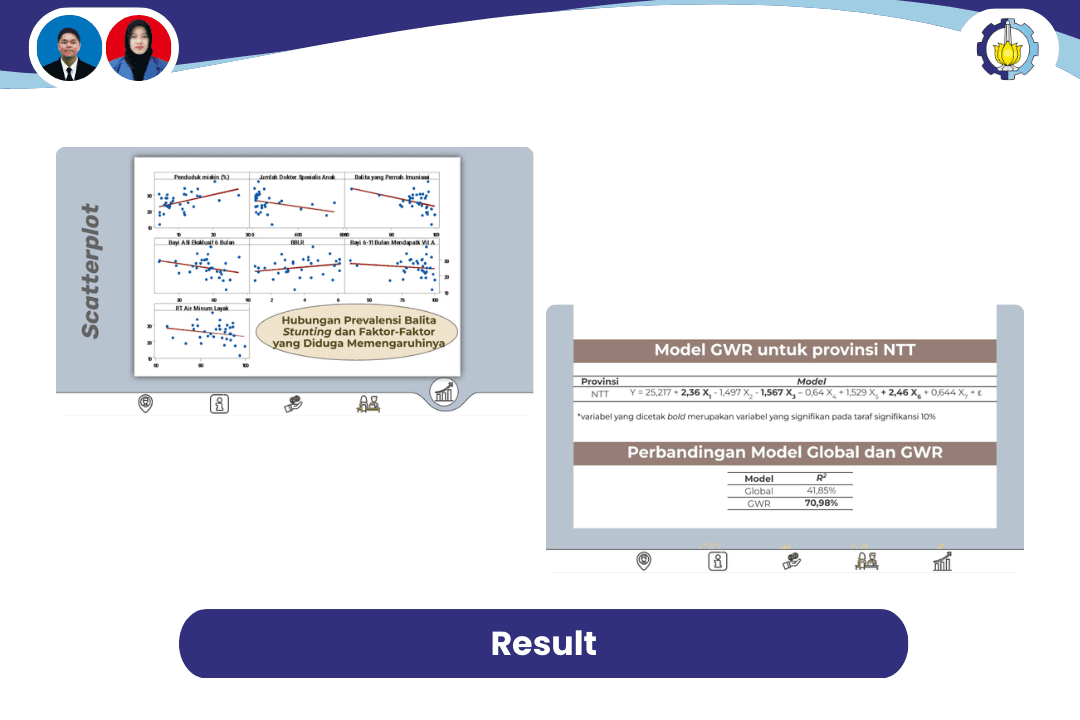
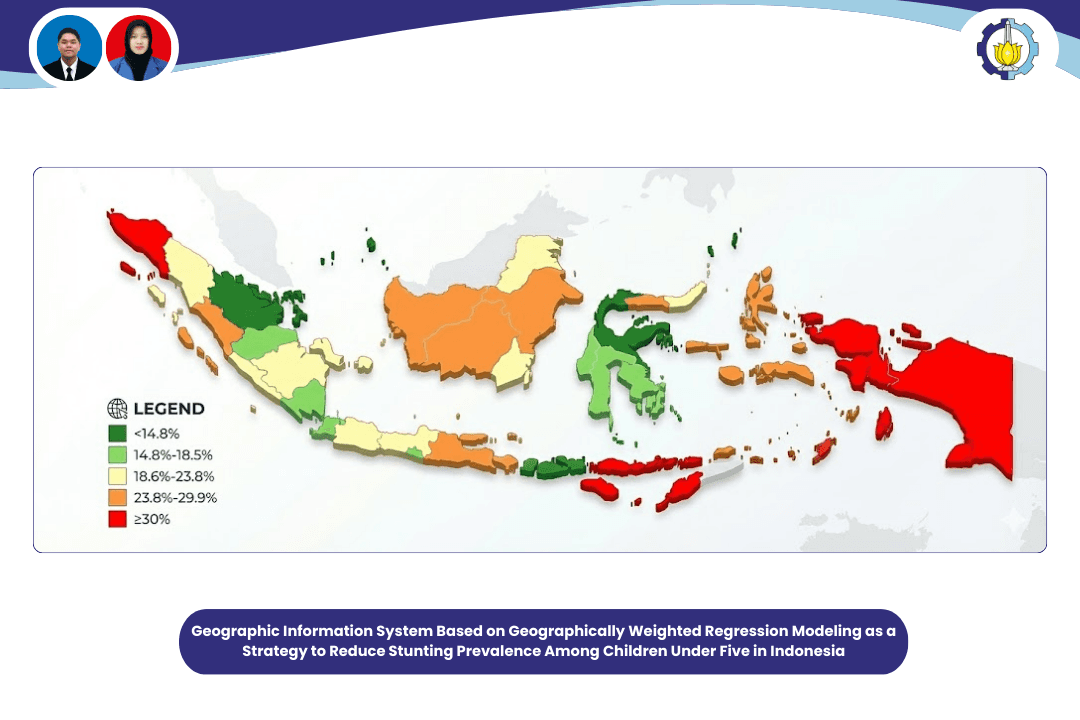
The project utilized Geographically Weighted Regression (GWR) and Multiple Linear Regression (MLR) to identify factors significantly associated with stunting prevalence. GWR was chosen to capture spatial variations across Indonesian provinces, producing location-specific parameter estimates. The results showed that GWR performed substantially better than the global regression model, with an R² of 70.98%, compared to the global model’s 41.85%. The analysis revealed that influential factors vary by region, and immunization coverage consistently plays a significant role in many provinces. The project also employed Geographic Information Systems (GIS) for spatial mapping of stunting prevalence and its determinants.
Result
The findings highlight that stunting remains a critical issue, particularly in eastern regions, with NTT recording the highest prevalence at 37.8%. The GWR model provided stronger explanatory power, demonstrating that spatial-based modeling is more effective for policy-oriented health analysis. The study concludes that different regions require tailored interventions due to varying influential factors. Recommendations include poverty reduction initiatives, improved allocation of public health funding, strengthening immunization programs, distributing Vitamin A more effectively, and developing interactive dashboards to monitor stunting data geographically.