Sentiment Analysis: Online Loan Services
Airlangga Statistics Event
2023
Background
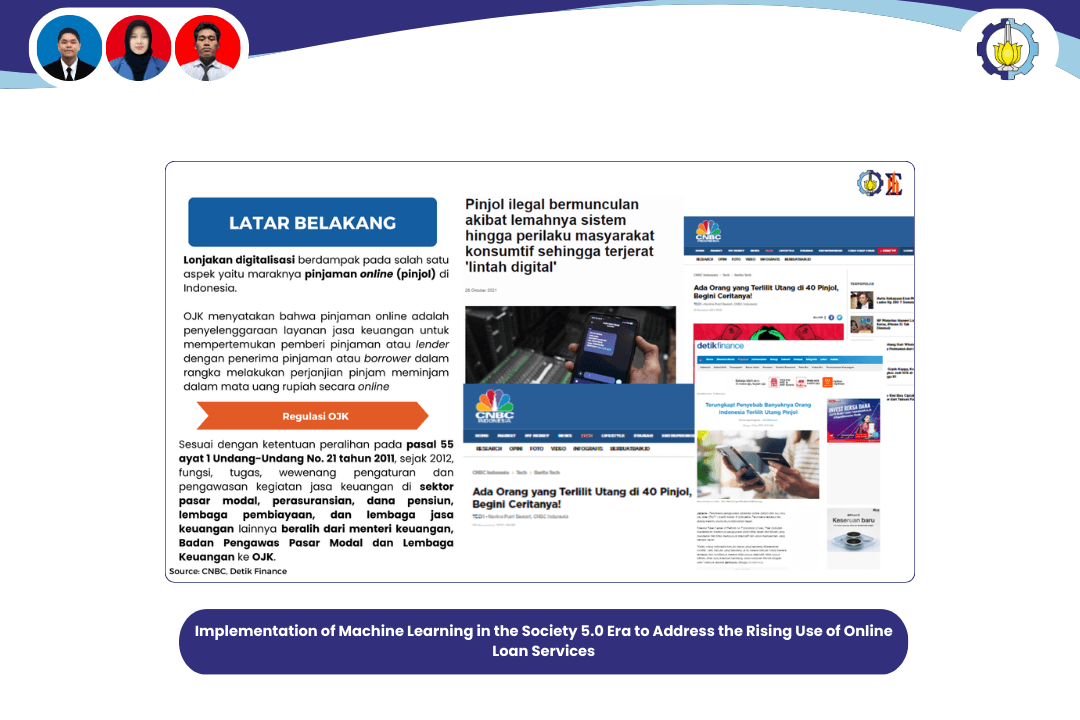
This project was developed for the Airlangga Statistics Event competition and was motivated by the rapid digital transformation in Indonesia, especially the surge of online lending services (pinjol). The increasing popularity of fintech lending brings both convenience and risks fast approval and flexibility on one side, but high interest rates, data privacy issues, and unethical debt collection practices on the other. To address this issue, our research analyzed public perceptions toward online lending by conducting sentiment analysis of tweets related to the topic.
Responsibilities
As the team leader of three, I coordinated the entire research workflow, delegated roles according to each member’s strengths, and ensured timely progress. I supervised data crawling, preprocessing, modeling, and interpretation. I also handled the analytical framework, model optimization, and final reporting, while representing the team during the presentation earning recognition as the Best Speaker in the competition.
Key Features
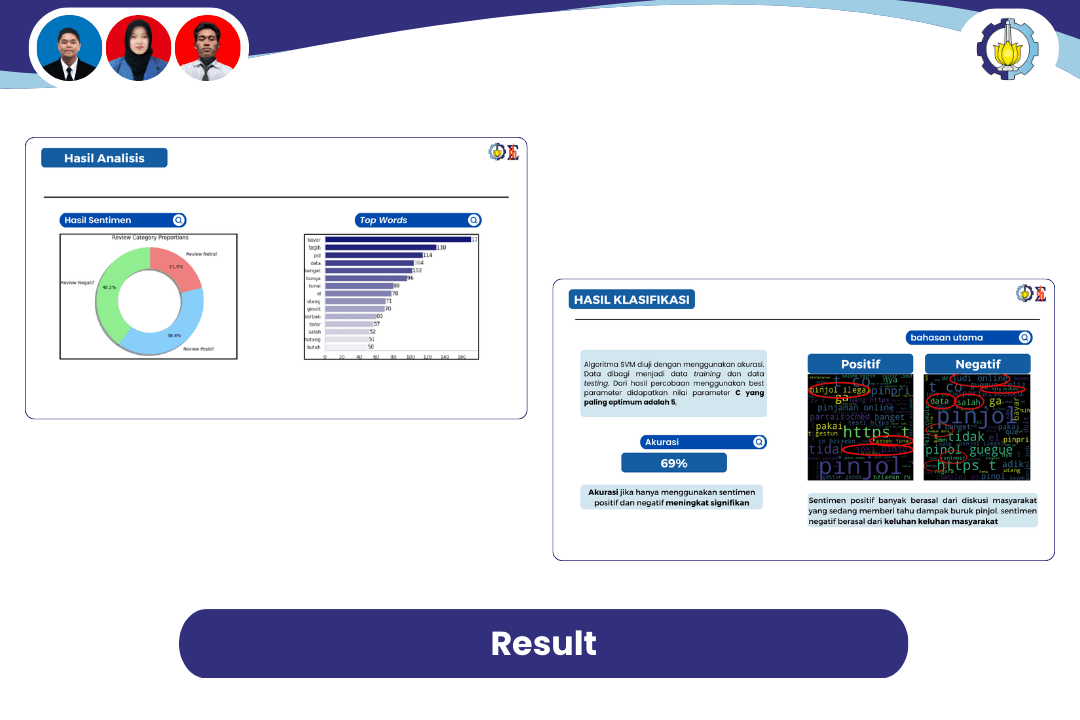
This project used a machine learning–based sentiment classification approach. Twitter data were collected through crawling and processed using NLP techniques such as casefolding, tokenizing, stemming, and stopword removal. Sentiment labeling was performed using a lexicon-based method, followed by TF-IDF weighting. The classification model used Support Vector Machine (SVM) with a linear kernel. After tuning, the best-performing model achieved an F1-score of 69%, indicating reliable performance in distinguishing positive, neutral, and negative sentiments. Visualization using word clouds further highlighted dominant themes in each sentiment category.
Result
The analysis revealed that public sentiment toward online lending is predominantly negative (40.2%), driven by concerns about privacy violations, aggressive debt collection, and high interest rates. Positive comments (38.8%) generally came from users sharing tips, warnings, or solutions related to pinjol usage. The SVM model performed effectively in automating sentiment classification with balanced precision and recall across categories. These findings suggest the need for stronger regulatory oversight from institutions like OJK and greater public awareness regarding the risks of online lending.